The global marketplace is defined by rapid technological shifts and evolving consumer demands. In this highly competitive environment, commercial enterprises can no longer rely on incremental adjustments to legacy product lines to maintain market share. True corporate resilience demands breakthrough innovation. At the core of every disruptive product, advanced material, and revolutionary software platform lies a structured backbone of industrial research.
Industrial research bridges the gap between theoretical scientific discovery and commercial product engineering. While academic research focuses primarily on expanding the broader horizon of human knowledge, industrial research is applied science. It focuses on solving specific, practical problems, uncovering scalable manufacturing methodologies, and identifying proprietary technological advantages. By establishing a rigorous, data-driven research infrastructure, organizations can de-risk the product development cycle, optimize resource allocation, and build sustainable competitive advantages that are difficult for competitors to replicate.
The Structural Framework of Applied Industrial Research
To understand how research fuels product innovation, one must look at the structural framework that defines the corporate research and development pipeline. This process is not a chaotic series of trial-and-error experiments; it is a highly disciplined, multi-stage methodology designed to transform raw insights into market-ready assets.
The journey begins with basic industrial research, where scientists and engineers investigate fundamental physical, chemical, or computational properties without an immediate product design in mind. This might involve synthesizing a new polymer matrix or exploring a novel machine learning architecture.
Once a foundational breakthrough is achieved, the workflow transitions into applied research. Here, the team explicitly evaluates how the new technology can be leveraged to address an unmet market need or optimize an existing manufacturing process.
The final phase is experimental development, where the insights gathered during applied research are translated into functional prototypes, blueprints, and production lines. This continuous pipeline ensures that product development teams are not building on guesswork, but are instead executing designs backed by empirical scientific validation.
De-Risking the Innovation Cycle Through Empirical Validation
Product development is an inherently risky financial endeavor. Millions of dollars can be consumed rapidly by engineering adjustments, tooling reconfigurations, and supply chain sourcing before a product ever reaches a retail shelf or an enterprise client. If a product fails after launch due to mechanical flaws, material degradation, or poor user alignment, the financial and reputational damage can be catastrophic.
Industrial research acts as a corporate insurance policy against these failures. By conducting rigorous material testing, stress simulations, and environmental modeling early in the conceptualization phase, researchers can identify fatal design flaws when they are still inexpensive to correct.
-
Accelerated Life Testing: Researchers subject prototypes to extreme heat, cold, moisture, and mechanical stress to simulate years of intensive wear within a matter of weeks, ensuring long-term product durability.
-
Predictive Computer Modeling: Utilizing advanced finite element analysis software allows engineering teams to observe how stress distributes across a physical component, optimizing the geometry before committing to expensive manufacturing molds.
-
Failure Mode and Effects Analysis: This systematic process catalogues every potential point of failure within a system, assessing its probability, severity, and detectability to implement preemptive safety redundancies.
Materials Science Innovation as a Competitive Differentiator
In physical product development, innovation is heavily tethered to the constraints of available materials. Whether designing consumer electronics, automotive vehicles, biomedical devices, or aerospace components, the structural properties of the raw materials dictate the performance limits of the final product. Industrial research in materials science is a primary engine for market disruption.
Consider the automotive industry shift toward electric mobility. Achieving longer driving ranges requires more than just scaling up battery sizes, which adds prohibitive weight to the vehicle. It requires industrial research into lightweight composite structures, ultra-high-strength steel alloys, and advanced aluminum matrices that reduce the vehicle curb weight without compromising structural safety during a collision.
Similarly, in consumer electronics, research into thermal interface materials allows manufacturers to pack faster, more powerful processors into thinner smartphone chassis without the risk of device overheating or thermal throttling. By discovering or engineering proprietary material blends, companies can unlock product performance capabilities that their competitors simply cannot match using off-the-shelf components.
Cross-Disciplinary Research and the Fusion of Hardware and Software
The nature of modern product innovation is increasingly cross-disciplinary. The historical boundaries separating mechanical engineering, chemical synthesis, electronic hardware, and software development have largely dissolved. Today, the most innovative products are cyber-physical systems that require seamless integration across multiple scientific domains.
Industrial research centers serve as the collaborative hubs where these diverse disciplines intersect. For example, the development of autonomous medical surgical tools requires mechanical engineers to design high-precision articulation joints, materials scientists to select biocompatible coatings, electronics experts to build low-latency sensor arrays, and software engineers to develop real-time computer vision algorithms.
By fostering an environment where experts from disparate fields can co-author research initiatives, companies can avoid fragmented product design. This holistic approach ensures that the physical hardware and the digital logic are co-optimized from inception, resulting in a cohesive, reliable, and superior user experience.
Optimizing Manufacturing Scale and Process Research
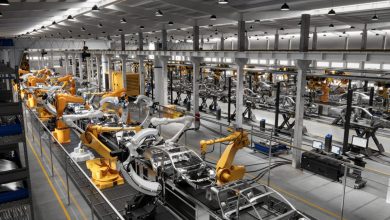
An innovative product concept is commercially worthless if it cannot be manufactured reliably, safely, and cost-effectively at scale. A brilliant laboratory prototype built by hand by a team of phds often presents immense challenges when introduced to a high-volume factory floor. Process research is the branch of industrial research dedicated to solving this critical scalability challenge.
Process researchers focus on analyzing chemical reaction times, machining tolerances, thermal dynamics, and automation workflows to streamline production. They design specialized factory tooling, formulate efficient assembly sequences, and implement inline automated quality control systems, such as machine vision cameras powered by artificial intelligence.
By optimizing the manufacturing process through scientific research, companies can drastically lower their scrap and defect rates, minimize cycle times, and reduce production costs. This operational efficiency allows the enterprise to price its innovative products competitively in the market while maintaining healthy profit margins.
IP Generation and Securing Sustainable Market Defensibility
Beyond the immediate tactical benefits of product improvement and cost reduction, industrial research serves a critical legal and strategic function: the generation of intellectual property. In a global economy where reverse-engineering and rapid copycat manufacturing are prevalent, a company must establish strong legal barriers to protect its innovations.
A robust industrial research program systematically documents every discovery, synthesis methodology, and technological configuration. This documentation forms the foundation for comprehensive patent portfolios.
By securing utility patents on core technologies, materials, and processes, an organization creates a legal moat around its product line. This prevents competitors from cloning the innovation, granting the researching enterprise a multi-year window of market exclusivity. This period of exclusivity allows the company to recoup its initial research and development investments and capture dominant market share before the broader industry can legally adopt similar methodologies.
Frequently Asked Questions
How do mid-sized companies fund intensive industrial research without massive enterprise budgets?
Mid-sized firms often utilize collaborative research models to maximize their research budgets. They form strategic partnerships with research universities, participate in industry-specific consortia, and leverage government-sponsored small business innovation research grants. By co-funding foundational research with academic institutions or state entities, smaller firms gain access to advanced laboratory equipment and specialized scientific talent at a fraction of the cost of building an in-house corporate research facility.
What is the difference between industrial research and market research?
While both are vital for product development, they focus on entirely different domains. Market research investigates consumer demographics, purchasing behaviors, competitor pricing, and market size to determine what product should be built and at what price point. Industrial research focuses on the scientific, technical, and engineering realities of how to physically build that product, exploring materials, software algorithms, mechanical systems, and manufacturing processes.
How do companies measure the return on investment of long-term basic industrial research?
Measuring the return on investment of basic research is challenging because the timelines to commercialization can span several years. Organizations typically evaluate performance using a balanced scorecard approach. Metrics include the number of patent applications filed, the velocity at which concepts transition from the lab to experimental development, the percentage of current revenue derived from products introduced in the last three years, and direct cost savings realized through process optimization research.
How does the rise of open-source software impact proprietary industrial research?
Open-source software has accelerated industrial research by providing robust, pre-validated foundational tools, particularly in artificial intelligence, data analytics, and simulation modeling. Instead of spending time building basic computational frameworks from scratch, industrial researchers can leverage open-source libraries to instantly focus their proprietary efforts on custom applications, specialized algorithms, and unique hardware integrations that yield direct commercial value.
Can industrial research help a company pivot when its core technology becomes obsolete?
Yes, a dedicated industrial research infrastructure is a powerful tool for corporate survival during technological disruptions. Because researchers focus on fundamental scientific principles and emerging technologies, they are often the first within an organization to recognize the limitations of a current product line. A robust research division allows a company to proactively develop next-generation alternatives, such as a traditional camera company researching digital image sensors, ensuring the business can pivot before market obsolescence occurs.
What role does sustainability play in modern industrial process research?
Sustainability has become a primary driver of process research across all major industries. Researchers are heavily focused on discovering bio-based alternative raw materials, reducing energy and water consumption within factories, eliminating hazardous waste byproducts from chemical manufacturing, and designing products for circular end-of-life recycling. Optimizing these environmental metrics through research not only ensures regulatory compliance but also reduces material waste and lowers long-term operational costs.